Inclusive Supply Chain Project
Scaling Community Wealth Building through the UK Shared Prosperity Fund
Overview
The Inclusive Supply Chain (ISC) project emerged from the trajectory of work funded by BIG South London:
- The BIG Innovation Voucher Scheme tested how the Community Wealth Building framework could support South London SMEs to strengthen their supply chains and social value contributions while growing.
- The BIG Integrate project developed diagnostic tools to tailor help for SMEs, trainings to push SMEs ahead in their readiness, and to boost SMEs’ capacity to supply large buyers, filling the gap in SMEs’ readiness to bid.
Building on these foundations, the ISC programme scaled up under the UK Shared Prosperity Fund (UKSPF), funded by the Greater London Authority (GLA).
The programme was also framed within Community Wealth Building (CWB), which seeks to redirect economic flows back into local communities. The ISC did this by supporting SMEs to access anchor-institution procurement opportunities, embedding EDI and social value into business practices, and fostering collaboration across South London.
Partners
The programme was delivered through a partnership between:
- London South Bank University Business School – leading research, curated workshops, student consultancies, and academic input.
- Newable – SME and anchor institution engagement, brokerage and advisory support.
Funder
- Greater London Authority (GLA) – funded the programme through the UK Shared Prosperity Fund (UKSPF).
Aims
- To promote social and economic cohesion in London by providing an intensive, tailored, supply-readiness programme to 300+ London SMEs, with a focus on underrepresented entrepreneurs (50% female-led, 40% ethnic-minority-led, 5% disabled-led).
- To provide bespoke business support through experienced Procurement Advisers, delivering a mix of interactive workshops and buyer-side engagement.
- To embed Community Wealth Building by linking SMEs to local anchor-institution procurement pathways using the social value hook.
- To provide curated workshops, one-to-one procurement advice, and Student Consultancies delivered by LSBU Business School.
- To encourage SMEs to explore alternative market opportunities and develop strategies for sustainable growth.
Funding & KPIs
- Budget: £1 million
- Timeframe: May 2023 – March 2025, with an extension to July 2026
- Target audience: London SMEs, with a substantial proportion of micro-SMEs (2–10 employees, minimum £50k turnover) and with a substantial proportion owned by underrepresented communities.
- Sectors covered: Creative, health, consumer, business services, education and tech, wholesale & retail, transportation & storage, accommodation, food services & catering, arts, entertainment & recreation.
KPI Targets
- Engagement: 300+ SMEs supported.
- Inclusion: 50% women-led, 40% ethnic-minority-led, 5% disabled-led businesses.
- Capacity Building:
- 100 decarbonisation plans developed.
- Tailored supply-readiness diagnostics delivered to all participants.
- Student placements supervised by academics.
- Business Outcomes:
- 30 new contracts won with an estimated total bid value of over £1 million.
- 60 new jobs created.
- 95 jobs safeguarded.
Delivery
The delivery model combined academic insight, student learning, and business support:
- Recruitment & Awareness Raising – targeted outreach across borough networks, focusing on underrepresented groups.
- Diagnostics – supply-readiness assessments to benchmark SME capabilities and identify support needs.
- Workshops and Masterclasses – supply chain fundamentals, readiness to bid, growth planning, EDI and social value.
- Brokerage and Advisory – one-to-one procurement advice and buyer–supplier matchmaking.
- Student Consultancies – LSBU students, supervised by academics, supported SMEs with practical projects.
- Community of Practice – facilitated peer-to-peer learning, knowledge sharing, and collective action aligned with CWB principles.
Outcomes
The ISC programme is on track to deliver:
- 300+ SMEs supported, with a strong emphasis on inclusion and representation.
- Measurable improvements in procurement readiness, with SMEs better positioned to access contracts.
- Tangible social value – contracts won, jobs created and safeguarded, and adoption of decarbonisation plans.
- A replicable model linking academic research, student learning, and SME support to deliver inclusive economic growth under a Community Wealth Building framework.
Collaborations
- Minority Business Matters (MBM) – supporting minority-owned SMEs and facilitating inclusive business growth pathways.
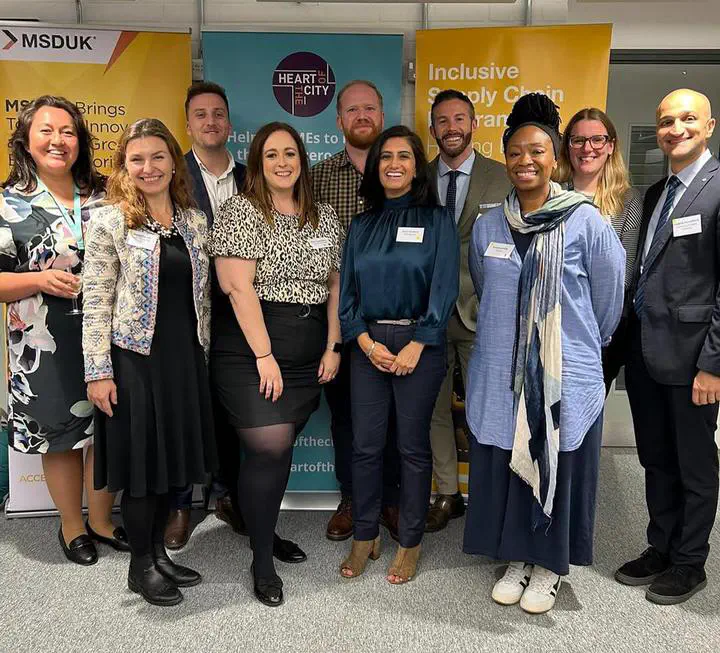
- Heart of the City – supporting SMEs in embedding responsible and sustainable business practices.
- Crystalisr (David Randall) – contributing expertise in procurement innovation, anchor networks, and community wealth building.
Key People
- Dr Valerio Ficcadenti – Academic Lead at London South Bank University, Principal Investigator for the project, responsible for research, student consultancy integration, and overall programme leadership.
- Liam Hickey – Programme Director at Newable, providing leadership in inclusive procurement delivery.
- Dhenny Casandry – Procurement Adviser, supporting SMEs with tailored one-to-one advice and brokerage.
Local Impact Examples
The programme’s reach extended across London boroughs, with initiatives such as:
- The Bromley Business Growth launch, where local businesses came together to celebrate new opportunities for inclusive supply chains and SME growth.
- The “Unlocking Opportunities with Responsible Business” event, organised with Minority Business Matters, which showcased responsible business practices and procurement opportunities for minority-owned SMEs.
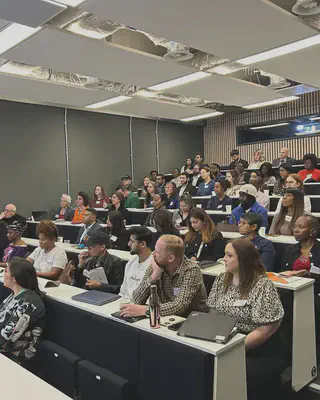
📢 Some of the social engagement around this event can be found here:
Additional social media coverage:
👉 The latest organised events and workshops can be found on the Newable events page.